


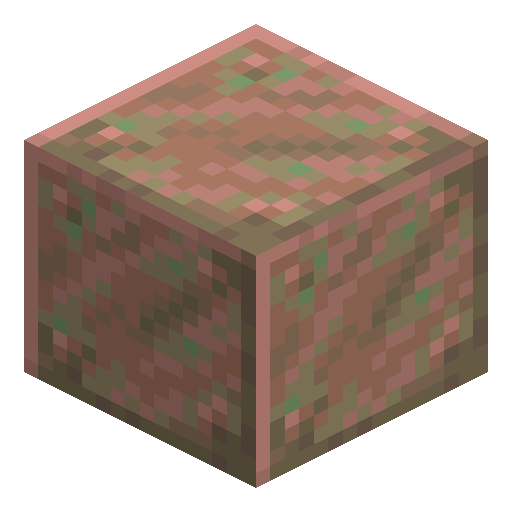
Exposed Copper
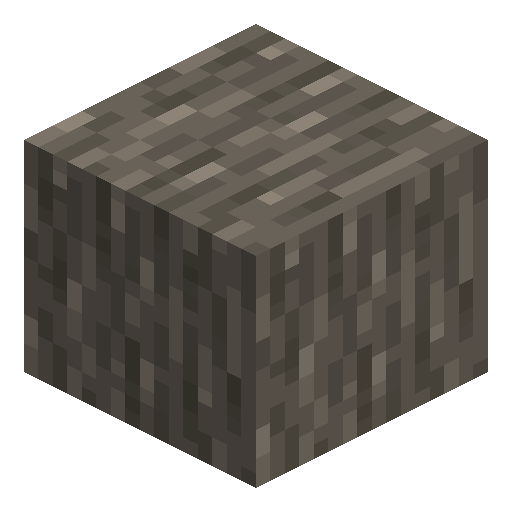
Exposed Copper is the second oxidation stage of a Copper Block, featuring a warm orange and pale-green patina appearance.
Description
Exposed Copper shares all structural properties of the Copper Block family, including full hardness, resistance to blast damage, and compatibility with slabs, stairs, and cut variants. To permanently lock Exposed Copper at this oxidation stage, players must right-click it with a Honeycomb to create Waxed Exposed Copper — once waxed, the block stops oxidizing and retains its two-tone appearance indefinitely. Note that a lightning bolt striking an unwaxed copper block instantly resets it to the fresh un-oxidized state — waxed copper is unaffected by lightning.
Block properties
| Item ID |
minecraft:exposed_copper
|
|---|---|
| /give command |
/give @p minecraft:exposed_copper
|
| Stackable | Yes (64) |
| Best tool | Pickaxe |
| Renewable | Yes |
| Hardness | 3 |
| Blast resistance | 6 |
| Java Edition | 1.17 |
| Bedrock Edition | 1.17.0 |
Guide
How to Get and Lock Exposed Copper in Minecraft
-
1
Place a fresh Copper Block
Craft a Copper Block from 9 Copper Ingots and place it in the world. The Copper Block begins in the un-oxidized (fresh) state. Oxidation ticks are random ticks and require no sky exposure — blocks sealed inside builds oxidize just as fast, and neither water nor rain changes the rate.
-
2
Wait for natural oxidation to reach the Exposed Copper stage
Copper Blocks advance through 4 stages: un-oxidized → Exposed Copper → Weathered Copper → Oxidized Copper. Each stage transition depends on random ticks, so the timing varies; an isolated Copper Block enters pre-oxidation after roughly 20 minutes on average. Grouping copper blocks actually slows oxidation down: any non-waxed copper within a taxicab distance of 4 blocks lowers the oxidation chance, and a block never oxidizes past a neighbor with a lower oxidation stage. Space Copper Blocks at least 4 blocks apart for the fastest oxidation. The Exposed Copper stage is reached after the first transition, showing roughly 75% orange and 25% pale-green patina spots.
-
3
Alternatively, strip a more-oxidized copper block with an axe
If you already have Weathered Copper or Oxidized Copper, you can work backwards: use any axe on the block to remove one oxidation layer at a time. One axe strike on Oxidized Copper produces Weathered Copper; one strike on Weathered Copper produces Exposed Copper. Each stripping action consumes one point of axe durability.
-
4
Wax Exposed Copper with Honeycomb to preserve it
Right-click the Exposed Copper block with a Honeycomb in your main hand. This converts Exposed Copper into Waxed Exposed Copper, which is permanently frozen at this oxidation stage and will never advance to Weathered Copper. Waxed Exposed Copper can still be stripped back to Exposed Copper with an axe if needed.
-
5
Use cut, slab, and stair variants for detailed builds
Exposed Copper is available in four shape variants: full block, Cut Exposed Copper, Exposed Copper Slab, and Exposed Copper Stairs. All four variants oxidize independently and can all be waxed with Honeycomb. Cut Exposed Copper is obtained by placing 4 Exposed Copper blocks in a 2×2 crafting grid.
A lightning strike hitting an unwaxed copper block instantly resets it to the fresh un-oxidized state, erasing all oxidation progress; waxed copper is immune to lightning. Place copper builds away from open areas prone to lightning, or use a lightning rod nearby to redirect strikes safely.
Used in crafts
- Exposed Cut Copper
- Exposed Copper Grate
- Exposed Copper Bulb
- Waxed Exposed Copper



Frequently asked questions
How do you get Exposed Copper in Minecraft?
Exposed Copper cannot be crafted. Players obtain Exposed Copper by placing a fresh Copper Block and waiting for it to oxidize naturally — the timing depends on random ticks, and an isolated Copper Block oxidizes noticeably faster than one surrounded by other copper blocks. Alternatively, players can use an axe on a Weathered Copper or Oxidized Copper block to strip it back one oxidation stage at a time until the Exposed Copper stage is reached.
How do you stop Exposed Copper from oxidizing further?
To permanently stop Exposed Copper from advancing to the Weathered Copper stage, right-click the Exposed Copper block with a Honeycomb in hand. This creates Waxed Exposed Copper, which is locked at this oxidation stage indefinitely and will never change color further.
Can you reverse Exposed Copper back to a fresh Copper Block?
Yes. Use any axe on an Exposed Copper block to strip one layer of oxidation, reverting it to an un-oxidized fresh Copper Block. The same technique works on Waxed Exposed Copper — one axe strike removes the wax, and a second strike removes the oxidation layer, returning a fresh Copper Block.
What is the difference between Exposed Copper and Weathered Copper?
Exposed Copper is the second oxidation stage of the Copper Block and shows roughly 75% warm orange with 25% pale-green patina. Weathered Copper is the third oxidation stage and features a majority green-teal appearance with less orange remaining. Both stages can be waxed with Honeycomb, and both support the same cut, slab, and stair variants.
Does Exposed Copper oxidize the same way in Java and Bedrock editions?
The visual result and four oxidation stages are identical across Java Edition and Bedrock Edition. The exact random tick timing may vary slightly between editions, but the relative progression — including the slowdown caused by nearby copper blocks — behaves the same way in both.
What block variants does Exposed Copper have?
Exposed Copper has four shape variants: the full Exposed Copper block, Cut Exposed Copper (crafted from 4 Exposed Copper blocks in a 2×2 grid), Exposed Copper Slab, and Exposed Copper Stairs. Each variant also has a waxed counterpart, giving 8 total block types in the Exposed Copper family.
Minecraft and all related materials are trademarks and copyrights of Mojang Studios © 2009–2026. This site is not an official Minecraft product and is not affiliated with or endorsed by Mojang Studios or Microsoft Corporation.